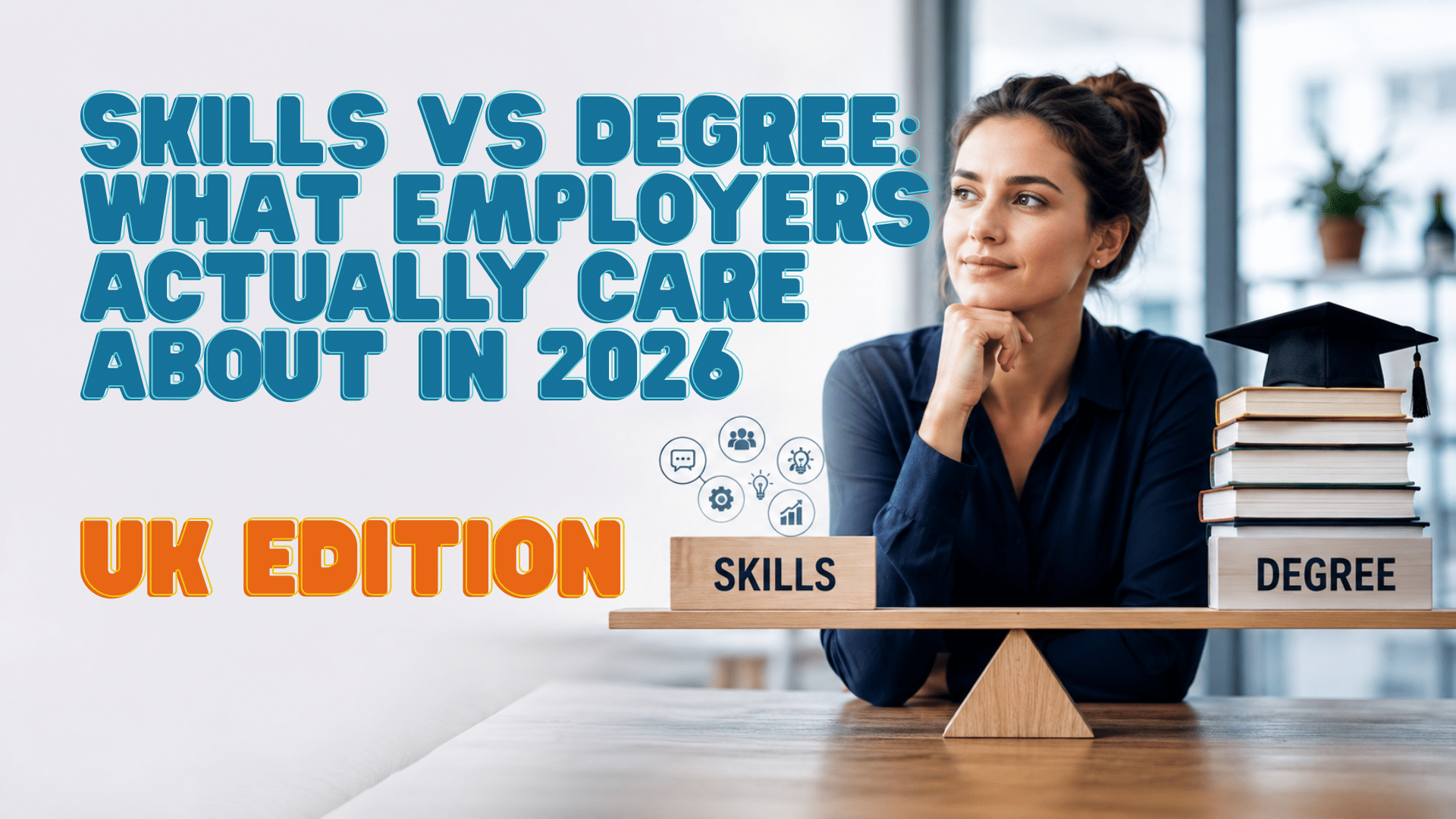
What Employers Actually Care About in 2026
For decades, earning a university degree was seen as the default route to a successful career. However, the employment market has changed significantly. Today, many employers are placing greater emphasis on practical skills, workplace experience, and the ability to perform effectively from day one.
This shift has led to the rise of skills-based hiring, where employers focus less on academic credentials and more on whether a candidate can demonstrate the abilities needed to succeed in the role.
If you’re considering a career change, returning to work, or exploring professional development options, you may be wondering whether a degree is still necessary. The answer depends on your career goals, but in many sectors, practical skills and recognised vocational qualifications are becoming increasingly valuable.
In this guide, we’ll explore the debate around skills vs degree employment, what employers actually look for in candidates, and how practical qualifications can help you build a successful career.
Why the Employment Market Is Changing

The Cost of Hiring Mistakes
Employers face significant costs when recruiting the wrong candidate. As a result, many organisations are focusing on evidence of real-world capability rather than educational background alone.
Businesses increasingly ask questions such as:
- Can this person communicate professionally?
- Can they manage their workload effectively?
- Do they have experience using workplace systems?
- Can they solve problems independently?
- Will they fit into the organisation quickly?
A degree may suggest academic ability, but it does not always demonstrate workplace readiness.
The Rise of Skills-Based Hiring
Skills-based hiring focuses on what candidates can do rather than where they studied.
Many employers now assess:
- Technical skills
- Communication skills
- Organisation skills
- Problem-solving ability
- Adaptability
- Digital literacy
This trend is particularly noticeable within administrative, business support, customer service, and office management roles.
What Employers Actually Care About in 2026

What Employers Actually Care About in 2026: Skills, Experience and Workplace Readiness
When employers review applications, they often prioritise transferable workplace skills over academic qualifications.
Some of the most desirable skills include:
Communication
Strong written and verbal communication remains one of the most sought-after skills across all industries.
Employees who can communicate clearly with colleagues, customers, and managers often stand out from other candidates.
Organisation
Administrative and business support professionals must manage multiple responsibilities simultaneously.
Examples include:
- Diary management
- Prioritising tasks
- Meeting deadlines
- Managing documents
- Coordinating projects
Problem-Solving
Employers appreciate individuals who can identify issues and find practical solutions without constant supervision.
Digital Skills
Modern workplaces depend heavily on technology.
Useful skills include:
- Microsoft 365
- Google Workspace
- Teams and Zoom
- CRM systems
- Project management software
- AI productivity tools
Adaptability
Technology and workplace practices continue to evolve. Employees who can learn quickly and adapt to change are highly valued.
Degree vs Skills Employment: What the Evidence Shows

The degree versus skills debate is often presented as an either-or choice, but the reality is more nuanced.
A degree can provide:
- Subject knowledge
- Research skills
- Analytical thinking
- Academic credibility
However, employers frequently place equal or greater emphasis on practical capability.
For example:
| Employer Need | Degree Helps | Skills Help |
|---|---|---|
| Writing reports | ✓ | ✓ |
| Managing schedules | Limited | ✓ |
| Using office software | Limited | ✓ |
| Handling customers | Limited | ✓ |
| Running meetings | Limited | ✓ |
| Solving workplace issues | Partial | ✓ |
In many office-based careers, employers are looking for candidates who can contribute immediately.
That is why applicants with relevant skills, experience, and vocational qualifications can often compete successfully against degree holders.
Vocational Training vs University

Different Routes to the Same Goal
There is no single route to career success.
University remains an excellent choice for professions that require specific degrees, such as medicine, engineering, or law.
However, many business support careers do not require a university degree.
Examples include:
- Personal Assistant
- Executive Assistant
- Office Manager
- Medical Secretary
- Administrator
- Virtual Assistant
For these careers, employers often prioritise:
- Professional behaviour
- Relevant skills
- Practical knowledge
- Workplace experience
The Advantages of Vocational Qualifications
Vocational qualifications are designed to prepare learners for specific job roles.
Benefits include:
- Career-focused learning
- Practical workplace scenarios
- Flexible study options
- Faster completion than many degree programmes
- Lower overall costs
- Direct relevance to employment
For career changers, vocational training can provide a quicker and more practical route into a new profession. For more on this topic, read our blog on Do You Need Qualifications to Become a PA?
What Employers Say They Want

Many employers now focus on a combination of:
- Relevant skills
- Positive attitude
- Practical experience
- Professional qualifications
When reviewing candidates, hiring managers often ask:
- Can this person perform the role?
- Have they shown commitment to learning?
- Do they understand the workplace?
- Can they demonstrate relevant skills?
A recognised diploma can help answer these questions.
It demonstrates:
- Commitment
- Professional development
- Industry knowledge
- Career motivation
How Practical Qualifications Can Help Career Changers

One challenge facing career changers is proving capability without direct experience.
This is where professional diplomas can make a significant difference.
They provide:
- Structured learning
- Industry-relevant knowledge
- Practical exercises
- Confidence for interviews
- Evidence of commitment
For example, someone moving from retail, hospitality, or customer service into administration can use a professional diploma to bridge the gap between previous experience and future career goals.
Why Lewis College Diplomas Focus on Practical Skills
At Lewis College, our diploma programmes are designed around the skills employers actively seek.
Rather than focusing solely on theory, our courses develop practical workplace capabilities that can be applied immediately.
Popular options include:
- Personal Assistant Diploma
- Executive Assistant Diploma
- Office Administration qualifications
- Medical Secretary training
Students develop skills in:
- Communication
- Organisation
- Business documents
- Meeting support
- Diary management
- Digital workplace tools
- Professional administration
This practical approach aligns closely with modern skills-based hiring trends.
Common Mistakes Job Seekers Make
Assuming a Degree Guarantees Employment
A degree can be valuable, but employers still expect candidates to demonstrate practical capability.
Ignoring Skill Development
Technology and workplace expectations continue to change. Continuous learning is essential.
Failing to Demonstrate Transferable Skills
Many candidates already possess relevant skills from previous roles but fail to highlight them effectively.
Overlooking Professional Qualifications
Professional diplomas can strengthen applications and help candidates stand out.
FAQ Section
Is a degree still important for employment?
For some professions, yes. However, many employers now focus on skills, experience, and practical ability alongside educational qualifications.
What is skills-based hiring?
Skills-based hiring focuses on a candidate’s abilities rather than their educational background. Employers assess whether applicants can perform the tasks required for the role.
Can I get an office job without a degree?
Yes. Many administrative, PA, EA, and office management positions do not require a degree. Relevant skills and professional qualifications are often more important.
Are vocational qualifications respected by employers?
Yes. Recognised vocational qualifications demonstrate commitment, practical knowledge, and job-relevant skills.
What skills do employers value most?
Communication, organisation, problem-solving, digital literacy, adaptability, and professionalism consistently rank among the most desirable workplace skills.
Looking Beyond Degrees
The question is no longer simply whether a degree is valuable. The more relevant question is whether you have the skills employers need.
For many careers, particularly within administration, executive support, and office management, practical capability often carries as much weight as academic achievement.
If you’re looking to start a new career, return to work, or improve your employment prospects, developing job-ready skills through professional training can be a highly effective route forward.
Lewis College offers flexible diploma programmes designed to help learners build the practical skills employers are actively seeking. Whether you’re interested in becoming a Personal Assistant, Executive Assistant, or Office Manager, the right training can help you demonstrate your abilities with confidence and take the next step in your career.
3 responses
This was a useful and relevant blog. I found the points about practical workplace skills, communication, organisation and digital confidence especially helpful. It is a good reminder that qualifications are important, but employers also want evidence that someone can apply their skills professionally in the workplace.
Very interesting blog ! I agree on different points. A degree does not define our future or limit the direction our careers can take. The skills we develop throughout our education and experiences are often transferable across industries and roles, enabling us to pursue new opportunities and adapt to changing career paths. Rather than allowing these skills to go unused, we should apply them toward meaningful goals.
Great blog ! The point about workplace readiness resonated with me. I’ve never attended University and throughout my career my employers have been far more interested in my ability to get the job done than whether I had a degree. They’ve valued my willingness to keep learning, adapt to change, handle challenges and perform well under pressure. In my experience demonstrating practical skills and a strong work ethic has opened more doors than a formal University qualification.
I also liked the point on skill-based hiring. It reflects what I’ve experienced throughout my career. I’ve found people are often intrigued and impressed when they learn that I’m completing an Executive Assistant Diploma with Lewis College. It shows that I’m actively investing in my professional development and preparing for an EA role, rather than simply ‘falling into it’.
This is also a great reminder that University isn’t the be-all and end-all. While it’s the right path for many, its not the only path to building a successful and fulfilling career. I think this blog is especially encouraging for those who don’t feel that the traditional route is for them. University is a lot of sacrifice and it’s not always feasible for everyone. Education doesn’t have to stop after finishing high school , there are so many opportunities for growth , development and to build a career through alternative pathways.
Skill development and willingness to learn whether that is through courses , diplomas, workshops and seminars can be just as valuable as a University degree.